Best Ways to Protect Your Phone Screen
Based on the broken screens that come through our door every week: what prevents them and what does not.
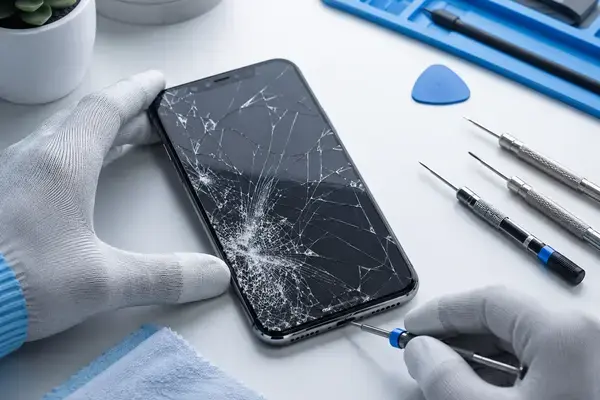
How screens actually break
Watching hundreds of cracked screens arrive, the pattern is clear: most cracks start at a corner or an edge, from a drop onto a hard floor at an angle, not from a flat face-down landing. The second most common is a sharp object in the same pocket, keys or coins, which creates a small chip that spreads with heat. Face-down drops on flat ground break screens far less often than people expect, because the force spreads. So protection should focus on corners, edges and the glass surface.
Tempered glass vs film protectors
A tempered glass protector adds a sacrificial layer that absorbs impacts and scratches and cracks instead of the screen; it is the best value protection for any phone, and on replacement screens, which use ordinary glass rather than Ceramic Shield or Gorilla Glass Victus, it is essential. Buy a full-adhesive, edge-to-edge one and fit it in a bathroom after a hot shower, where the air is dust-free. A film or hydrogel protector resists scratches but does nothing against impacts; it suits curved-edge Samsung screens where glass protectors lift. Privacy protectors reduce brightness and touch sensitivity; use them only if you need them.
The case features that matter
- A raised lip of at least a millimetre around the screen and the camera, so the glass never touches the ground face-down.
- Reinforced corners, the air-pocket or thicker-bumper kind, because corners take the first hit.
- A slightly soft edge material (TPU) rather than rigid plastic, which transmits the shock.
- Ignore “military grade” claims; look at the lip and the corners.
Thin, bare-back “skin” cases look good and protect nothing. A folio case with a cover protects the screen from pocket damage but adds bulk.
Habits that save more screens than any accessory
- Keep the phone in a pocket on its own, screen facing your leg, no keys or coins.
- Do not use it while walking on stairs or getting out of a car; those are the two drop situations we hear most.
- Use a wrist strap or a pop-grip if you have a large phone and small hands.
- Do not put it on the edge of a table, a bed, or the roof of a car.
- Replace a cracked protector promptly; a chipped protector can scratch the glass under it.
If it cracks anyway
Put clear tape over the crack if there are loose splinters, stop using the phone if the display shows lines or ghost touches, and back it up. A cracked screen with a working display is a routine repair: 30 to 60 minutes at APEX, starting from Rs 2,500 for older iPhones and Rs 3,500 for Android LCDs. Prices and options are on the iPhone screen page and the estimator, and after the repair, fit a tempered glass protector the same day.